The History of Monster-Themed Fashion in Pop Culture

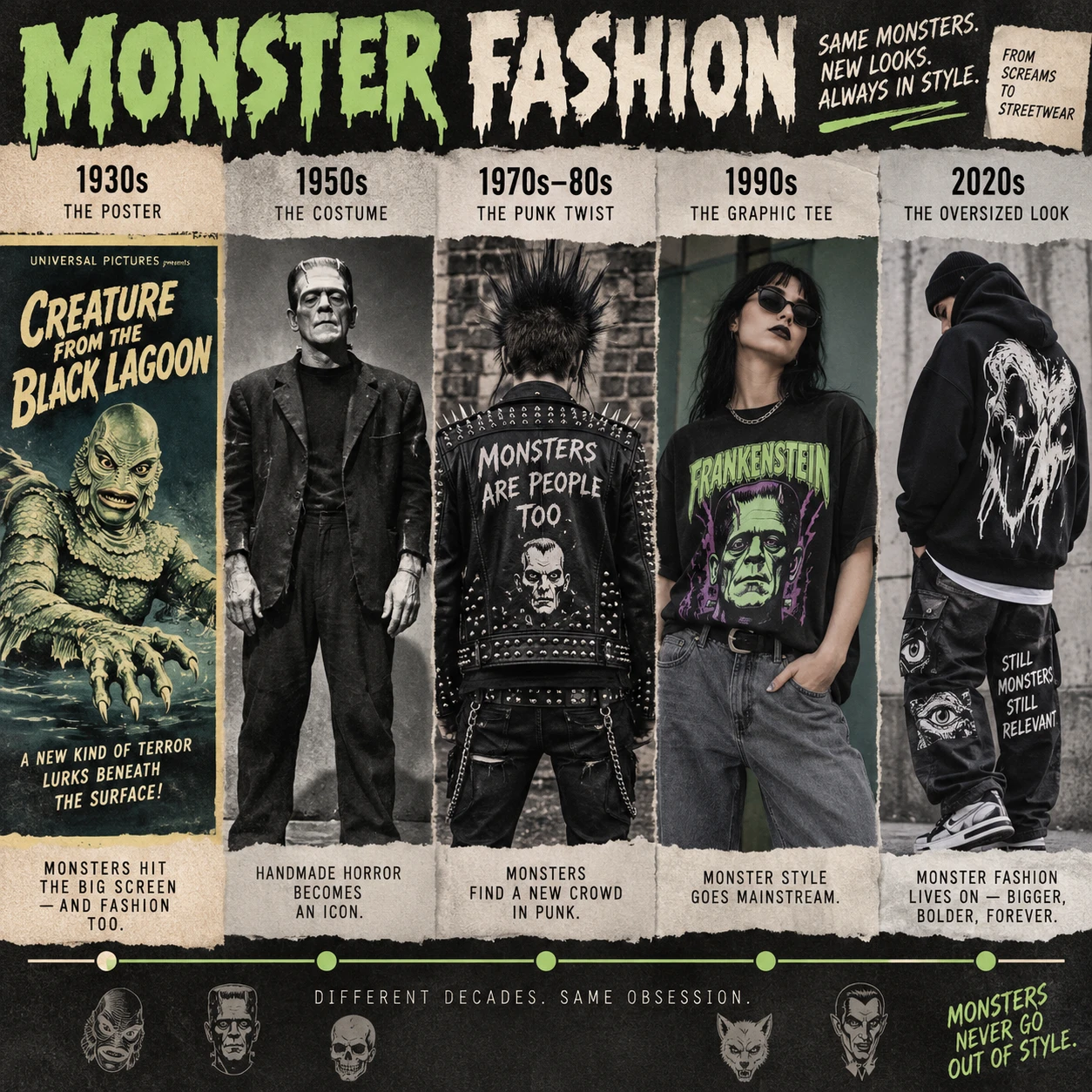
Monsters have always been good at making an entrance. In pop culture, their silhouettes, colors, and unsettling details have inspired everything from Halloween costumes to graphic tees and oversized streetwear. Over time, monster-themed fashion has moved beyond dressing up as a creature: it lets fans carry a favorite story, subculture, or attitude into everyday life.
That shift unfolded across folklore, classic movie monsters, horror cinema, music scenes, and fandom. Each era found a different way to wear the strange.
From folklore and classic monsters to screen icons
Folklore and classic monsters gave fashion its first lasting creature motifs: fangs, claws, scales, stitched skin, and supernatural silhouettes. When horror cinema brought these figures to the screen, their visual designs became recognizable references people could reproduce in clothes and costumes.
Folktales had long imagined vampires, werewolves, ghosts, and other beings as signs of danger or mystery. Their features were easy to recognize and reinterpret: a vampire’s cape and high collar, a werewolf’s fur and claws, or a ghost’s pale, flowing shape. These images supplied a visual vocabulary for theatrical dress, masquerades, and later Halloween costumes.
Early screen icons made the vocabulary more specific. The bandaged look of a mummy, the bolts associated with Frankenstein’s monster, and the wolfish profile of a creature feature villain could be suggested with a few clear details. Costumes did not need to reproduce a film exactly; a dark cape or a streak of theatrical makeup could signal the inspiration.
That simplicity matters to fashion. A monster design needs a strong outline to read from across a room, which also makes it suited to a jacket patch, an embroidered motif, or a printed shirt. Classic monsters turned frightening features into portable symbols, ready for fans to adapt.
Horror films bring monsters into everyday style
Horror films made monster imagery familiar enough to wear, transforming screen creatures into designs for shirts, accessories, and costume pieces. As audiences recognized the icons, clothing could signal fandom without requiring a full disguise.
Monster costumes remain a direct way to borrow a creature’s identity, especially at Halloween. But the visual shorthand of horror cinema travels easily into ordinary clothes: a graphic tee featuring a monster’s face, a skull-print hoodie, or a tote with a creature-feature illustration. These pieces let wearers reference a film’s mood while keeping the rest of an outfit practical.
Different horror styles offer different design cues. Gothic fashion draws on dark palettes, dramatic layers, lace, and romantic or macabre details. Creature features often inspire bolder, more playful prints, while slasher and supernatural imagery can lend itself to distressed graphics or stark contrasts. The result depends as much on the illustration and styling as on the monster itself.
There is a useful distinction between wearing an image and wearing a whole character. A printed tee is an everyday reference; a mask, makeup, and coordinated clothing create a costume. Both belong to monster fashion, but they suit different settings. A subtle print may work at a concert or on a casual day, while a detailed horror look is better suited to a party or convention.
Monsters, music, and alternative subcultures
Punk, goth, and other alternative subcultures helped make monster imagery a statement of identity, not only a reference to horror films. Their clothing often uses dark colors, distressed surfaces, dramatic makeup, and confrontational graphics to challenge conventional ideas of polish and taste.
Monster imagery fits naturally into that language. A snarling face or skeletal print can convey defiance; a vampire motif can lean into gothic romance; a DIY patch on a jacket can mark a personal connection to a band, film, or scene. These choices are not uniform rules. Alternative style has always included individual interpretation, from carefully layered goth looks to rough-cut punk pieces.
Music also gave fans places to wear these references. At gigs, club nights, and fan gatherings, band shirts and horror graphics could communicate shared interests without a conversation. A monster print might be funny, eerie, nostalgic, or deliberately provocative, depending on the wearer and the design.
The key change was context: monsters could belong to a subculture’s everyday wardrobe rather than appearing only as a one-night costume. That influence still shows up in graphic tees, patches, boots, dark accessories, and oversized layers.
From costume and cosplay to casual clothing
Monster-themed fashion moved into casual clothing as fans began separating a character’s recognizable features from a complete costume. Cosplay still aims to portray a character or creature, while everyday monster style borrows selected colors, graphics, and accessories.
Halloween costumes and cosplay offer space for transformation. A cosplayer might recreate a creature’s makeup, silhouette, and props with close attention to a particular version from a film, game, or comic. A costume can be intricate and character-specific; its purpose is usually to build a complete look for an event, performance, or photo.
Casual clothing works differently. It might take one element—a monster illustration, a set of claw marks, a fang-shaped pendant, or a color palette—and pair it with familiar pieces such as jeans, sneakers, or a simple jacket. The wearer keeps the reference but does not have to perform a character.
For a practical transition from cosplay to daily wear, start with the detail you like most. Choose a graphic tee for a clear fandom reference, a monster-themed accessory for a quieter signal, or a roomy hoodie that echoes a creature’s exaggerated shape. Cosplay builds the whole character; casual fashion edits it down. The trade-off is straightforward: detailed costumes make a stronger transformation, while everyday pieces are easier to wear repeatedly.
Monster graphics meet modern streetwear
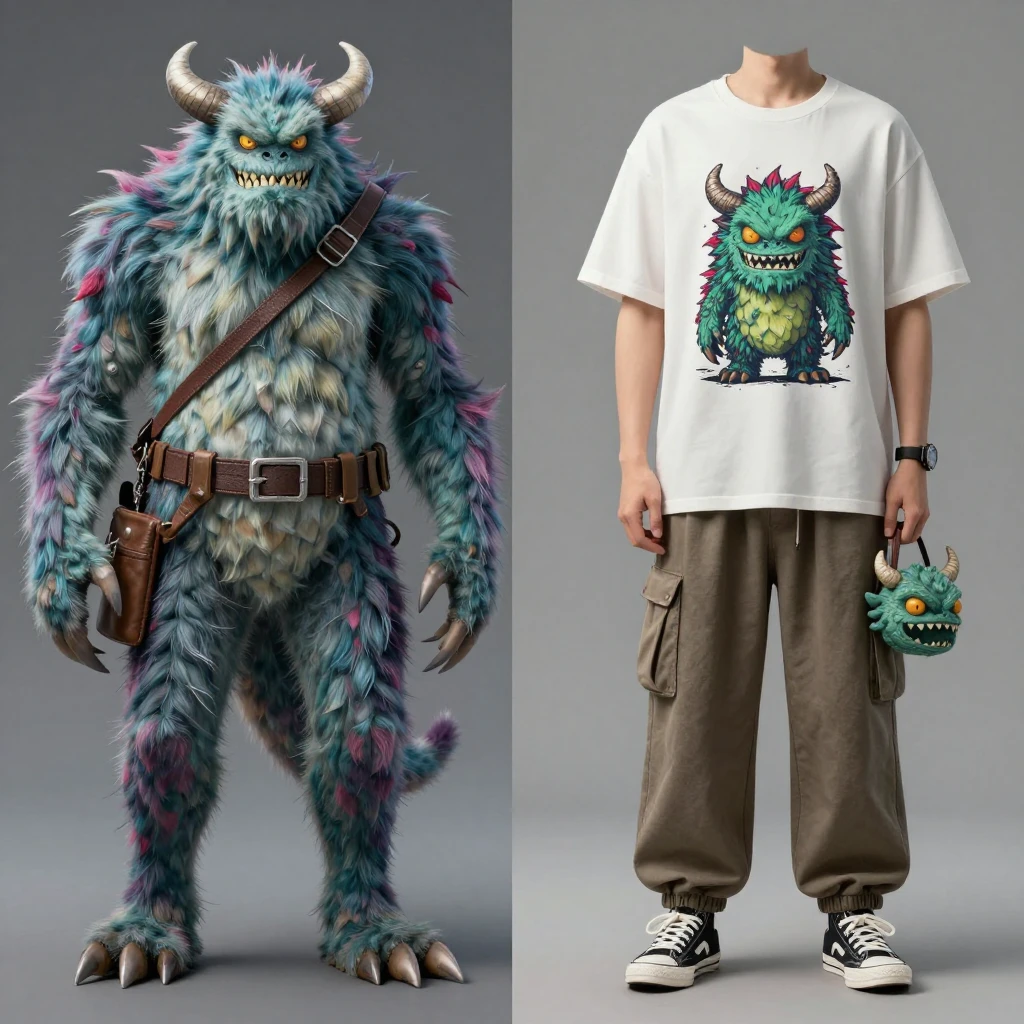
Modern streetwear makes monster fashion easy to wear through graphic tees, bold prints, expressive accessories, and oversized silhouettes. These pieces bring creature imagery into everyday outfits without requiring a costume or a specific fandom event.
Graphic tees are among the clearest ways to show a monster reference. A large front print makes the creature the focal point; a small chest design or back graphic offers a more understated option. Hoodies, sweatshirts, caps, bags, and patches extend the same idea, giving fans room to build an outfit around one image rather than covering every surface with prints.
Oversized streetwear adds shape to the look. A roomy hoodie or loose tee can create a dramatic silhouette that feels playful and relaxed. Pairing a bold monster print with plain trousers and simple shoes usually keeps the outfit legible. If both the top and accessories carry busy graphics, the design can compete with itself.
- For a low-key look: choose one small monster graphic and keep the rest of the outfit neutral.
- For a statement outfit: use a large print or oversized top, then repeat one color from the artwork in an accessory.
- For costume-to-streetwear styling: keep one distinctive piece, such as a creature mask-inspired cap or a themed jacket, and leave the rest comfortable and wearable.
The same design may not suit every situation, and an oversized cut can feel less practical in hot weather or under a fitted coat. A good choice balances the artwork, fit, and intended use rather than relying on the monster reference alone.
Why monster-themed fashion endures
Monster-themed fashion endures because it combines nostalgia, fandom, and self-expression in a recognizable visual form. A creature print can recall a favorite film, signal membership in a fan community, or simply add humor and drama to an outfit.
Monsters also leave room for personal interpretation. One person may choose a classic horror icon for its history; another may prefer a cartoonish creature for its playfulness. Gothic fashion can make the same subject feel romantic, while a bright graphic tee can turn it into a joke. The imagery is flexible enough to move between moods and generations.
That flexibility links costumes, cosplay, and streetwear without making them interchangeable. A Halloween outfit offers transformation for an occasion. Cosplay focuses on character portrayal. Everyday monster clothing takes a more selective approach, using a print or silhouette as part of a personal wardrobe.
For fans, the appeal is often simple: a monster can be strange, funny, frightening, or familiar, sometimes all at once. Wearing that image gives pop culture a place in daily life. The best piece is the one that suits the wearer’s style as well as the creature it celebrates.
Frequently asked questions
How did classic monsters influence fashion?
Classic monsters supplied recognizable visual details such as capes, fangs, fur, bandages, and stitched features. Costume makers and clothing designers could adapt those cues into Halloween outfits, accessories, and printed graphics without reproducing an entire character.
When did monster-themed clothing become everyday wear?
There was no single turning point. Monster imagery appeared in costumes and fan merchandise before becoming more at home in casual wardrobes through graphic tees, music and alternative subcultures, and later streetwear. The shift was gradual: fans could wear a reference as a print or accessory instead of dressing as a full creature.
What is the difference between monster fashion and cosplay?
Cosplay aims to portray a particular character or creature, often through coordinated clothing, makeup, and props. Monster fashion uses monster-inspired elements—such as a graphic tee, dark palette, or creature-themed accessory—as part of a broader personal outfit.
How can monster-themed pieces fit into streetwear?
Build around one focal piece, such as an oversized monster hoodie or a graphic tee, and pair it with simpler clothing. Repeat one color from the print in a cap or bag if you want the outfit to feel coordinated. For a subtler look, choose a small graphic or accessory instead of a large all-over print.